UNESCO ICH CONVENTION
The meanings of cultural heritage has been broadened in recent times and the change in our understanding stems from the social change experienced by human societies under the influence of global coherence. The works of countries in the scope of UNESCO and other UN agencies have helped to shape our understanding of the Cultural Heritage: it is not restricted to monuments and collections of objects. Rather, it includes traditions or living expressions inherited from our ancestors and passed on to our descendants, such as oral traditions, performing arts, social practices, rituals, festive events, knowledge and practices concerning nature and the universe or the knowledge and skills to produce traditional crafts. It is not only the UNESCO’s heritage Convention, the other conventions and agreements in the international and regional arena also acknowledge the traditional life styles, practices and cultures. Article 8 j of the Convention on Biological Diversity https://www.cbd.int/convention/wg8j.shtml is one such example.
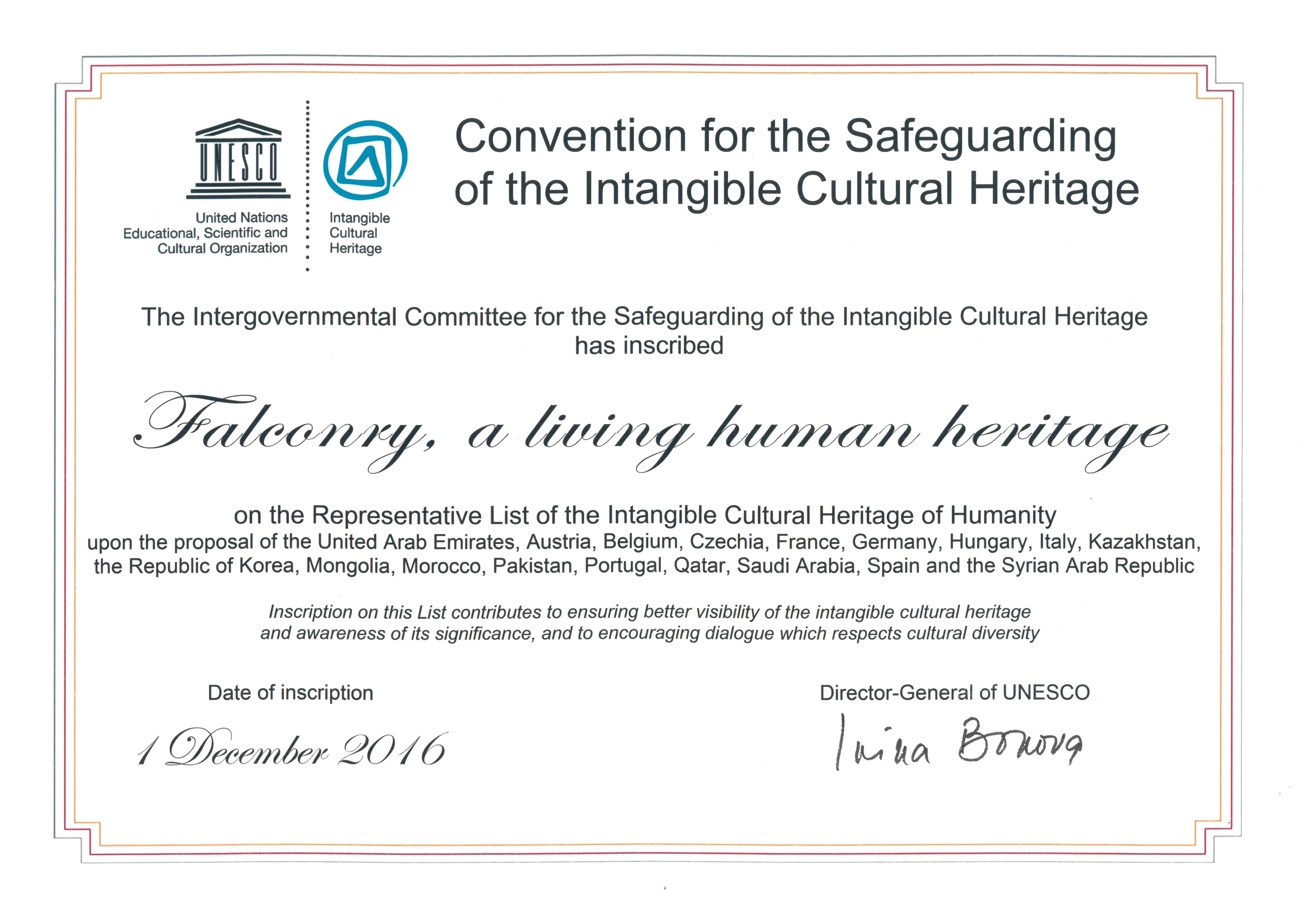
The Convention for the Safeguarding of the Intangible Cultural Heritage is a UNESCO treaty adopted by the UNESCO General Conference on 17 October 2003 and is also ratified by Government of Pakistan. The Convention aims at safeguarding the intangible cultural heritage; to ensure respect for the associated communities, to raise awareness and mutual appreciation and promotion of cooperation and assistance. There are diverse areas of cultural heritage in the scope of 2003 Convention and the lists maintained by the Convention are inclusive providing an opportunity to the countries to include new elements. Countries’ nominations are evaluated annually to inscribe cultural practices and expressions of intangible heritage. The website of the Convention provides information on 508 cultural elements inscribed by 122 member countries under this Convention. As per agreed text of the Convention (Article 29), parties are obliged to submit progress reports on safeguarding activities of the inscribed elements.
As member of this Convention, countries identify and define the various elements of the intangible cultural heritage present in the respective territory through a broad based consultative process. Falconry is recognized as a Living Human Heritage (https://ich.unesco.org/en/RL/falconry-a-living-human-heritage-01209) in 18 countries party to this Convention. Being a member, Pakistan is obligated to safeguard falconry as Intangible Cultural Heritage. In 2016, Pakistan Falconry Association (PFA), Lok-Virsa, Ministry of Information & Broadcasting Islamabad, and Pakistan National Commission of UNESCO played a significant role in inscription of Falconry as Culture Heritage (ICH). Considering the same, under article 13, Pakistan is obliged to take policy and administrative measures to safeguard this ICH element that is spread over Pakistan. Further, Pakistan needs to report on the concrete measures taken for the safeguarding the inscribed ICH elements. Indeed, the actual purpose of the inscription is to take all possible measures for the safeguarding ICH.
The Ethical Principles of the Convention are widely accepted tools devised for protection of human rights and the rights of the owners of the ICH, indigenous and local peoples. These principles are guiding tools and good practices for governments, organizations and individuals directly or indirectly affecting intangible cultural heritage in order to ensure sustenance of the heritage for generations to come. These principles serve as the very basis development of specific codes of ethics and tools suited for local and sectoral circumstances.
The principles highlight significance of the custodians in having the primary role in protection and conservation of their heritage. In addition, the custodians have the right to continue practices thus ensuring the continuity of the intangible cultural heritage based on Mutual respect and appreciation between various interest groups including countries. As acknowledged in other UN led communications, prior informed consent in a transparent manner becomes the basis of collaboration, and access to the elements of cultural heritage including practices in all circumstances. The values of the intangible cultural heritage solely rest with the custodian communities. Similarly, the owners of such heritage enjoy the benefit from the protection of such heritage and invariably its use.
The dynamic and living nature of intangible cultural heritage and cultural diversity is recognized and respected and the factors are to be identified and accessed for possible impact on sustenance of the elements of Heritage. On the positive node, the design and implementation of safeguarding measures and recognition of ethnic identities should include the support of youth and all possible interest groups. The principles stress that the owners should never be alienated from their heritage.
The well thought Ethical Principles for Safeguarding Intangible Cultural Heritage can be seen at the website
More details for Falconry a living heritage ICH UNESCO submission can be seen at the website